Daylight Saving Time Is a Public Health Crisis (And We Do It On Purpose)
Educational Content Disclaimer: This article provides educational information only and is not intended as medical advice, diagnosis, or treatment. The content discusses general health topics and should not replace consultation with your licensed healthcare provider. Always consult with your doctor before making changes to your diet, supplements, or medications. Dr. JJ Gregor is a Doctor of Chiropractic licensed in Texas and practices within the scope of chiropractic care.
Welcome to my absolute least favorite day of the year.
Last night, an hour was stolen from most of America. We don't get it back until we return to standard time in the fall. This morning, millions of people dragged themselves out of bed feeling like garbage. Tomorrow morning is going to be worse, because the acute hit of the clock change compounds when the work week starts and the alarm goes off earlier than your biology is ready for.
It's asinine. I hate it. I've hated it for years, and the data keeps giving me more reasons to.
The Numbers Aren't Subtle
The Monday after spring forward is one of the most dangerous days on the calendar. Not because of anything mysterious. Because sleep deprivation is hitting an entire population at once.
Heart attack rates spike roughly 24% in the days immediately following the spring transition. Stroke hospitalizations increase in the two days after the clock change. Car accidents go up. Workplace injuries climb. Suicide rates tick higher. Productivity drops measurably.
The fall transition back to standard time shows the opposite pattern. Most of those numbers improve.
A policy decision that exists to give people an extra hour of evening daylight is spiking cardiac events and putting sleep-deprived drivers on the road. The argument in its favor is that it gets dark too early in the winter. That's it. That's the whole case.
About That Argument
"If we stay on standard time it'll be dark at four-thirty in the afternoon."
Sure. Closer to five, probably. And honestly? That's probably good for you.
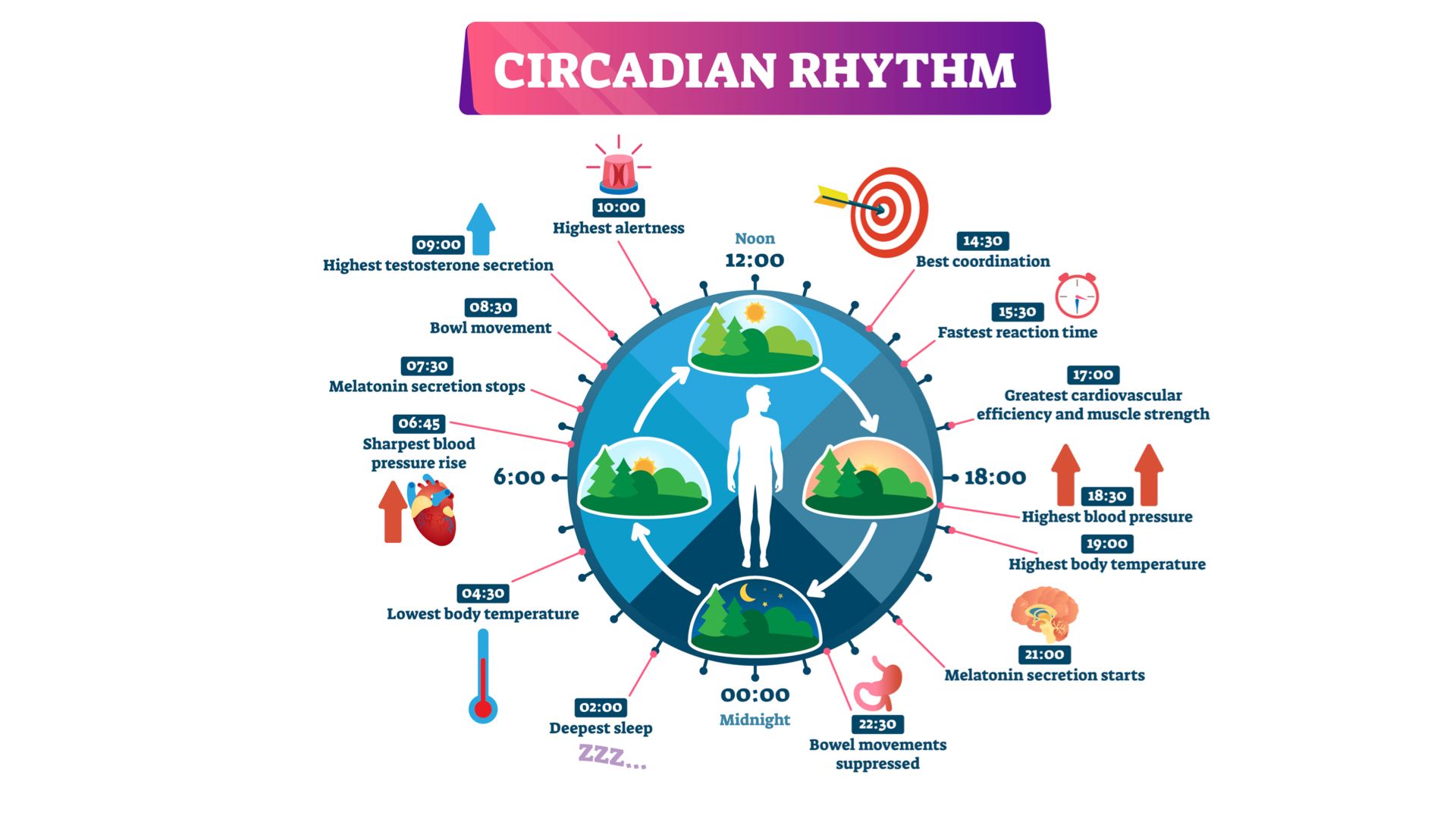
Darkness in winter is not a design flaw. It's the design. Your immune system does critical work under cover of darkness. Melatonin is not just a sleep hormone: it's a potent antioxidant, an anti-inflammatory molecule, and a regulator of natural killer cell activity. The longer nights of fall and winter are a biological invitation to slow down, sleep more, and let your body run the maintenance cycles it cannot run while you're awake and staring at a screen.
There's also a reasonable argument that the fat we carry as a population is at least partly a consequence of incandescent lighting, late-night TV, and the relentless blue light exposure that has dismantled the body's ability to follow a natural dark cycle. We're not just tired. We're metabolically disrupted in ways that trace directly back to fighting darkness instead of respecting it.
Every culture before electric light understood this instinctively. Rest more in winter. Move less. Sleep when it gets dark.
We decided we were smarter than tens of thousands of years of seasonal human biology. We extended the artificial day by legislative fiat, told people to maintain summer-level output year-round, and I'm sure there were no economic incentives involved in keeping people working, spending, and consuming for an extra hour of light. None at all.
The resistance to seasonal darkness is not a preference. It's a symptom of a culture that has pathologized rest. And DST is its annual monument.
It Also Takes a Lot Longer Than You Think
Here is something most people don't know: it takes four to five weeks for your morning to feel like it did before the switch. Not four to five days. Weeks. One full moon cycle.
Your body is not being dramatic. Your circadian system is calibrated to solar time, and recalibrating it is not an instant process. Think about it from a hunter-gatherer standpoint: we would move across landscapes gradually, following seasons as they changed over weeks and months. We did not jump one hour forward overnight. There's no biological mechanism for that because it never needed to exist until some guy in a suit decided to mandate it.
Your body is working against a policy that has no physiological basis. It hasn't saved energy. It hasn't saved time. It hasn't accomplished anything measurable except disrupting the hormonal rhythm of hundreds of millions of people twice a year.
What You Can Actually Do About It
You can't fix the legislation (I have some thoughts on that, but ask me somewhere that doesn't live on the internet permanently). What you can do is minimize the damage and accelerate the recalibration.
A. Get morning light on your face, outside, as early as possible. Not through a window. Glass filters the UV spectrum your retinas need to send the right signal. Get outside within thirty minutes of waking, no sunglasses, and let actual sunlight hit your eyes. Even five minutes moves the needle. Thirty is better. This is the single strongest signal you can send to your brain's circadian clock that this is the new wake time. Bask in it.
B. Protect your evenings. When the sun goes down, your light environment needs to follow. Dim the overhead lights. Get off the screens. Your melatonin is trying to rise and blue light suppresses it directly. If you want a practical tool here, look up TrueDark glasses: one of the better blue light blocking options for evening use. The fact that it still looks like 8pm outside at what is biologically 7pm makes evening light hygiene harder to take seriously. Do it anyway.
C. Lock in your wake time. Go to bed when you're tired, but get up at the same time every single day, including weekends. No sleeping in. Your brain's clock is more sensitive to wake time than bedtime, and morning consistency anchors the whole rhythm faster than anything else. I used to have terrible Monday morning blahs because I'd sleep in on weekends and wreck my wake rhythm. Once I locked in a consistent wake time regardless of the day, that went away.
D. Give yourself the full recovery window. Four to five weeks. If you're still off in April, you're not broken. You're recalibrating against a one-hour biological insult that your physiology has no evolutionary precedent for handling. Be patient, keep the morning light habit, stay hydrated, get some movement, and let the system catch up.
This Isn't Just About One Bad Monday
The clock change is the acute event. The biology it disrupts runs all year. The same systems that get knocked sideways by DST get knocked sideways by late nights, artificial light past dark, and the general cultural habit of treating rest as something you do when you've run out of other options.
Your adrenal glands are deeply embedded in this system. Chronic circadian disruption is chronic stress, and your adrenals respond to it the same way they respond to any other ongoing stressor: with a stress hormone output that eventually exhausts the system. The fatigue that doesn't resolve with sleep, the afternoon crashes, the wired-but-tired feeling at night are not personality traits. They are downstream consequences.
The clock change just makes it visible for a week.
Mid-week I'll go into the full science: the actual clock in your brain, how it reads light and coordinates your entire hormonal rhythm, and why a medical system that has been around for thousands of years mapped this same biology centuries before we had the neuroscience to confirm it. That one is worth the read.
For now: go get some morning light. Your biology has been waiting for it since 2am.
Part 1 of a 3-part series on circadian rhythms, the biology of seasonal health, and why fighting darkness is fighting your own physiology.
Think your fatigue might be more than just a rough week? Dr. JJ Gregor uses Applied Kinesiology and functional health approaches to identify the root causes of chronic dysfunction at his Frisco, Texas practice. Schedule a consultation and find out what's actually driving your symptoms.
Stay connected with news and updates!
Join our mailing list to receive the latest news and updates from our team.
Don't worry, your information will not be shared.