
What Your Cholesterol Numbers Actually Mean

Educational Content Disclaimer: This article provides educational information only and is not intended as medical advice, diagnosis, or treatment. The content discusses general health topics and should not replace consultation with your licensed healthcare provider. Always consult with your doctor before making changes to your diet, supplements, or medications. Dr. JJ Gregor is a Doctor of Chiropractic licensed in Texas and practices within the scope of chiropractic care.
You get your cholesterol test results. You see a bunch of numbers. Your doctor says one thing. The internet says another.
What do these numbers actually mean?
More importantly: which numbers actually matter for heart disease risk?
Here's what your cholesterol panel is telling you and what it's not.
The Standard Cholesterol Panel
Most doctors order a basic lipid panel with four numbers:
- Total cholesterol
- LDL cholesterol
- HDL cholesterol
- Triglycerides
They look at these numbers, compare them to "norm...
Cholesterol: The Myth That Won't Die

Educational Content Disclaimer: This article provides educational information only and is not intended as medical advice, diagnosis, or treatment. The content discusses general health topics and should not replace consultation with your licensed healthcare provider. Always consult with your doctor before making changes to your diet, supplements, or medications. Dr. JJ Gregor is a Doctor of Chiropractic licensed in Texas and practices within the scope of chiropractic care.
Your doctor tells you your cholesterol is high. You need to start a statin immediately or you'll have a heart attack.
You're scared. You comply. You take the medication.
Your cholesterol drops. You feel terrible. Brain fog, muscle pain, fatigue.
But hey, at least your cholesterol is lower, right?
Here's what your doctor didn't tell you: the entire cholesterol-heart disease hypothesis is one of the biggest medical frauds of the last 70 years.
Cholesterol doesn't cause heart disease. It never did.
And the e...
You Might Have Fewer Allergies If You Ate More Dirt!
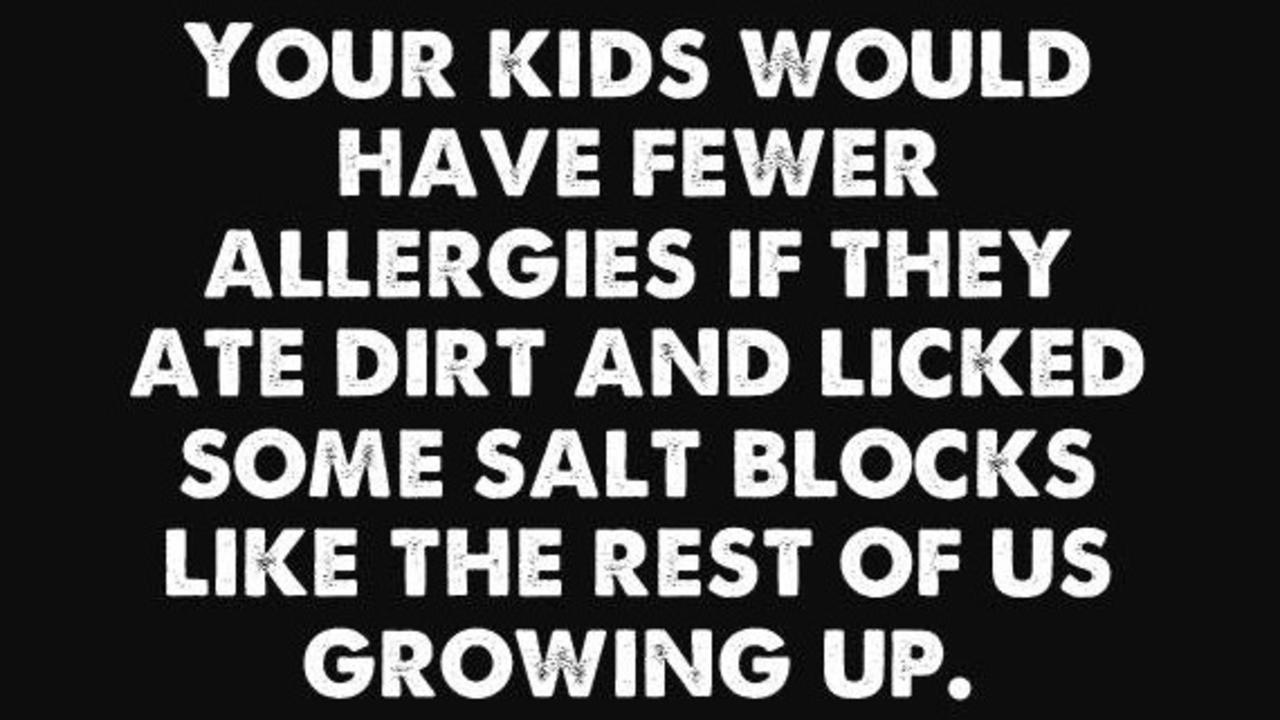
You Might Have Fewer Allergies If You Ate More Dirt
The title sounds like clickbait. It's not. There's substantial evidence that early-life exposure to dirt, dust, animals, and microbes significantly reduces the risk of developing allergies and asthma. This isn't fringe science—it's the hygiene hypothesis, supported by decades of epidemiological and immunological research.
I'm not advocating eating mud pies or abandoning hand washing after using the bathroom. The medical profession's adoption of hand washing in the mid-1800s dramatically reduced maternal and infant mortality from puerperal fever. Ignaz Semmelweis, the physician who proposed that doctors wash their hands between autopsies and deliveries, was ridiculed by his colleagues, institutionalized, and died shortly after—only to have his theories validated posthumously as germ theory became accepted.
Hygiene matters. But our modern obsession with sterilizing every surface, eliminating all bacterial exposure, and using antimicr...
What is the Whole30?

Educational Content Disclaimer: This article provides educational information only and is not intended as medical advice, diagnosis, or treatment. The content discusses general health topics and should not replace consultation with your licensed healthcare provider. Always consult with your doctor before making changes to your diet, supplements, or medications. Dr. JJ Gregor is a Doctor of Chiropractic licensed in Texas and practices within the scope of chiropractic care.
The Whole30: Why I Actually Support This One
Generally I can't stand the latest vogue diet. The Potato Diet, the Alkaline Diet, the Cookie Diet, The Master Cleanse, or the myriad of other oddball diets that try to get you to eat anything but real, unprocessed food.
However, my natural skepticism of fad diets got thrown out the window when the Whole30 started catching on. I find it rather sad that eating whole, unprocessed foods in their natural state gets called a "fad" in the first place. A lot of people think...
Why You Should Avoid High Fructose Corn Syrup!
Why You Should Avoid High Fructose Corn Syrup
High-fructose corn syrup (HFCS) dominates the American food supply. It's in soda, bread, condiments, yogurt, salad dressings, and nearly every packaged food on grocery store shelves.
The food industry loves it because it's cheap, shelf-stable, and sweeter than sugar. Your body hates it because it metabolizes differently than any sugar humans evolved eating.
Here's what HFCS actually is, how it differs from natural sugars, and why it's wrecking metabolic health at a population level.
What Is High-Fructose Corn Syrup?
HFCS is sugar extracted and concentrated from corn. In the early 1970s, food scientists developed industrial processes to break down cornstarch into glucose, then convert some of that glucose into fructose.
The result: a syrup that's 55% fructose and 45% glucose (HFCS-55, used in soft drinks) or 42% fructose and 58% glucose (HFCS-42, used in baked goods and processed foods).
The problem: Fructose and glucose exist a...
Why Does My Child's Asthma Seem Worse This Time of Year?

Educational Content Disclaimer: This article provides educational information only and is not intended as medical advice, diagnosis, or treatment. The content discusses general health topics and should not replace consultation with your licensed healthcare provider. Always consult with your doctor before making changes to your diet, supplements, or medications. Dr. JJ Gregor is a Doctor of Chiropractic licensed in Texas and practices within the scope of chiropractic care.
Every year, the same pattern: cold weather hits, the holidays arrive, and asthma attacks spike.
You've noticed it. Your child's inhaler gets used more frequently between November and January than the rest of the year combined.
This isn't coincidence. Specific seasonal factors converge during the holidays to create the perfect storm for respiratory inflammation.
Here's what's actually triggering winter asthma attacks, and what you can do to prevent them.
The Holiday Asthma Spike
Approximately 300 million pe...
The Best Way To Control Your Holiday Stress

Educational Content Disclaimer: This article provides educational information only and is not intended as medical advice, diagnosis, or treatment. The content discusses general health topics and should not replace consultation with your licensed healthcare provider. Always consult with your doctor before making changes to your diet, supplements, or medications. Dr. JJ Gregor is a Doctor of Chiropractic licensed in Texas and practices within the scope of chiropractic care.
The holidays bring unavoidable stress. Family gatherings. Shopping. Travel. Financial pressure.
You can't eliminate those stressors. But you can stop amplifying them.
The biggest amplifier? Blood sugar chaos.
Here's what most people miss: your adrenal glands can't tell the difference between a blood sugar crash and an emotional crisis. Both trigger the same cortisol release. Both deplete your stress reserves.
During the holidays, you're already maxed out managing unavoidable stressors. Why add fuel to the fir...
What You Should Not Be Eating When You Have IBS?

Educational Content Disclaimer: This article provides educational information only and is not intended as medical advice, diagnosis, or treatment. Food elimination diets should be done under professional guidance, especially for those with nutritional concerns or eating disorder history. The low-FODMAP diet is meant to be temporary, not a permanent lifestyle. Always work with qualified healthcare providers for proper diagnosis and treatment of IBS and related conditions. Dr. JJ Gregor is a Doctor of Chiropractic licensed in Texas and practices within the scope of chiropractic care.
What You Should Not Be Eating When You Have IBS
If you've been diagnosed with IBS, you've probably been told to "watch what you eat" or "keep a food diary." Maybe someone handed you a list of trigger foods. Maybe you're already avoiding half the grocery store and still having symptoms.
Here's what nobody explains: the foods that trigger your IBS aren't the problem. They're revealing the problem.
When...
What is Irritable Bowel Syndrome (IBS)?

Educational Content Disclaimer: This article provides educational information only and is not intended as medical advice, diagnosis, or treatment. The content discusses general health topics and should not replace consultation with your licensed healthcare provider. Always consult with your doctor before making changes to your diet, supplements, or medications. Dr. JJ Gregor is a Doctor of Chiropractic licensed in Texas and practices within the scope of chiropractic care.
What Is Irritable Bowel Syndrome (IBS)?
IBS is one of those diagnoses that patients mention almost apologetically. Most people don't walk into my office saying "I have IBS." They tell me about gas, bloating, unpredictable bowel movements, stomach pain that comes and goes.
They've learned to plan their lives around bathroom access. They know which foods will wreck them for days. They've been told it's stress, or anxiety, or just something they'll have to live with.
Here's the reality: about 20% of the populatio...
What is Adrenal Fatigue?

What is Adrenal Fatigue?
Adrenal fatigue is one of those terms that natural health practitioners have discussed for decades, but conventional medicine is only recently beginning to acknowledge.
You won't find "adrenal fatigue" in medical textbooks. It's not recognized as a disease. But the symptoms are real, the mechanism is understood, and millions of people are suffering from it right now.
Adrenal fatigue describes a state where your adrenal glands can't keep up with the demands placed on them. They're not pathologically diseased (Addison's disease). They're just exhausted—hypofunction rather than complete failure.
This matters because your adrenal glands regulate stress response, inflammation, blood sugar, immune function, energy production, and more. When they're depleted, everything breaks down.
Here's what adrenal fatigue actually is, how to recognize it, and what to do about it.
Understanding Your Adrenal Glands
Your adrenal glands sit on top of your kidneys. They're smal...