
Why Everyone's Adrenals Are Getting Destroyed Right Now (And What To Do About It)
Educational Content Disclaimer: This article provides educational information only and is not intended as medical advice, diagnosis, or treatment. The content discusses general health topics and should not replace consultation with your licensed healthcare provider. Always consult with your doctor before making changes to your diet, supplements, or medications. Dr. JJ Gregor is a Doctor of Chiropractic licensed in Texas and practices within the scope of chiropractic care.
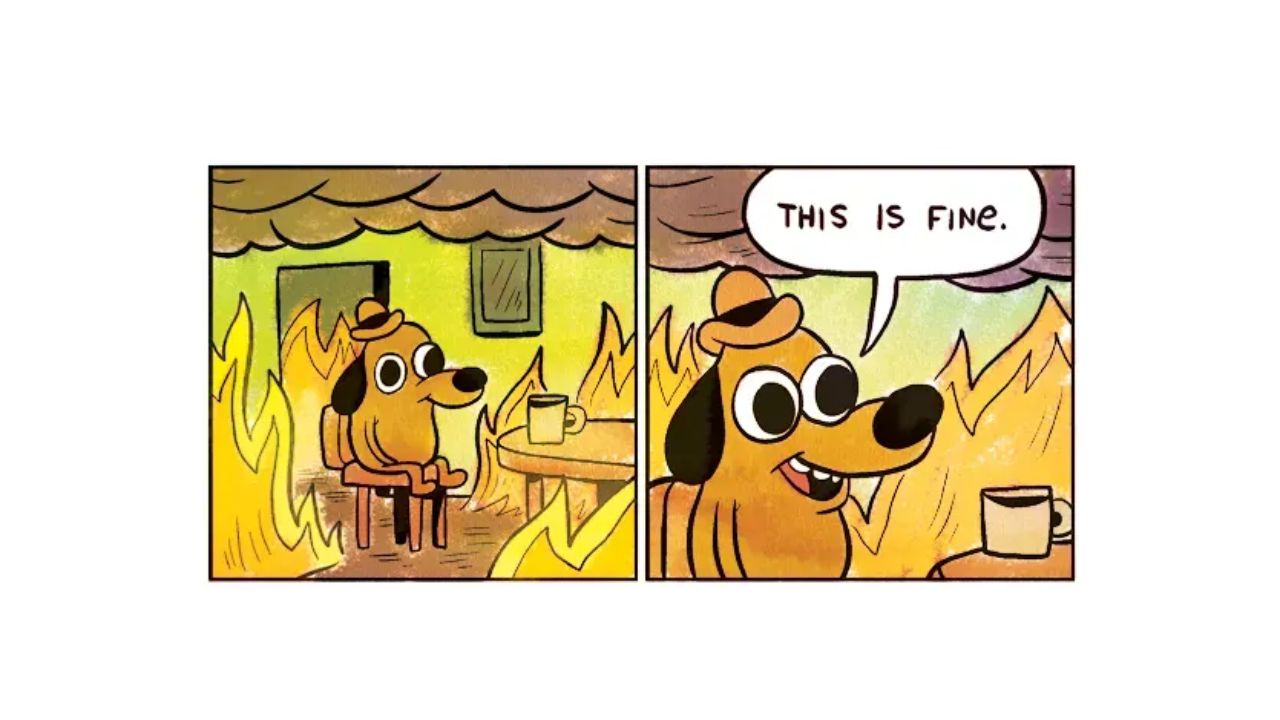
Everyone is stressed as hell right now and they're getting their ass kicked.
Every person. Every appointment. Every conversation.
Anxiety. Stress. Fear. Sitting in the chest. Crushing. I wrote most of this after teaching at ICAK's winter meeting in Orlando. What became clear in the days after confirmed what I was already seeing in the clinic: everyone, and I do mean everyone, is getting crushed by adrenal exhaustion right now.
Almost all of my patients this week said some version of "I don't know what's wrong with me. I'm just off." The anxiety is overwhelming. They can't sleep. They're waking up in the middle of the night. Can't focus. Stuck in doom scrolls. Actively avoiding their phone so they don't see the news, then consuming all of it anyway. Heart racing for no reason.
I'm experiencing every single one of these symptoms too.
Here's what's actually happening: your adrenals are trying to keep up with the world right now, and they're losing.
What Anxiety Actually Is
Anxiety is fear of the future. More specifically, it's the perception that you have no control over what's coming at you.
Your nervous system is designed to respond immediately to threats. See danger. Fight or run. Threat resolved. Nervous system calms down and gets to rest. That's the parasympathetic/sympathetic balance working the way it should.
But when the threat isn't immediate, when it's abstract and constant and everywhere—economic collapse, government overreach, social breakdown, personal instability—the nervous system doesn't register that it's not life-threatening. It still just perceives threat.
So it keeps firing. Never gets the signal to stand down.
Cortisol is produced continuously. Cortisol is a protective hormone. It's what gets you out of bed in the morning. If you're struggling to get out of bed and you're still exhausted when you wake up, your adrenals are fatigued. It's what lets us go to sleep. If you can't get to sleep at night, that's cortisol too. If you wake up in the middle of the night, cortisol surged.
The problem is cortisol also regulates blood sugar and keeps you in fight or flight mode.
This is adrenal depletion meeting chronic anxiety. Your body is trying to respond to a threat it can't locate, can't fight, and can't escape.
The Convergence: Ash Wednesday, Ramadan, and the Year of the Fire Horse
Yesterday was Ash Wednesday. The start of Ramadan. And the first full day of the Year of the Fire Horse, which in Chinese astrology means intense energy, conflict, and upheaval.
I'm not normally into mystical interpretations, but the timing is impossible to ignore.
Three major spiritual traditions marking the beginning of periods of reflection, fasting, and discipline, all landing in the same week.
Historically, the Year of the Fire Horse is associated with destruction before renewal. The last Fire Horse Year was 1966—the start of the '60s counterculture, the Civil Rights Movement, profound social upheaval in American history.
Now add in the Epstein files. ICE raids. Government corruption on full display. Riots in multiple cities. The general sense that institutions we used to trust are either incompetent or actively malicious.
Your nervous system responds exactly how it's designed to. It sees problems and tries to fight. But it's designed for short-term acute threats, not chronic existential dread.
What Your Adrenals Are Doing Right Now
Your adrenal glands sit on top of your kidneys. They produce cortisol, epinephrine (adrenaline), norepinephrine, testosterone, estrogen, aldosterone, and progesterone. They respond to stress. They respond to blood sugar. They help your immune system and they also suppress your immune system when needed. Your sleep-wake cycle is intimately tied to all of this. Cortisol is an anti-inflammatory. (NSAIDs are non-steroidal anti-inflammatories. The steroids being referred to are cortisols and cortisones.)
When stress is acute, cortisol spikes. It mobilizes glucose. Sharpens focus. Suppresses inflammation temporarily so your body can deal with the immediate threat.
When stress is chronic, cortisol production eventually can't keep up. Your adrenals get exhausted. Cortisol drops. Now your body can't control inflammation. Or it spikes super high and then crashes because it can't produce any more. Then it spikes again once reserves rebuild, then crashes again.
You're on a roller coaster of spikes and crashes. Waves of exhaustion followed by panic, heart racing, sweating.
This is why you're feeling anxious, exhausted, overstretched, reactive, and unable to cope with things that normally wouldn't bother you. You might be more stressed than you think, and your regulatory system is struggling to keep up.
The Perception of Control Problem
Here's the tricky part: your adrenals don't distinguish between real threats and perceived threats.
Watching the news for three hours produces the same cortisol response as being chased by a grizzly bear. Your body doesn't know the difference.
The perception of lack of control amplifies the response. If you can do something about a threat, your nervous system handles it better. If you can't—which describes most of what's happening in the world right now—the stress response stays activated with no resolution.
This is why doom-scrolling destroys you. You're feeding your nervous system dopamine with every swipe while simultaneously presenting threat after threat after threat. You get angrier and angrier. SAVE Act, Epstein files, Build the Wall, whatever you want to be outraged about.
Your adrenals pay the price for all of it.
The Story of Fixing the World
There's a story from Reader's Digest I love. A father and daughter. The daughter was asking questions. "Why is there hunger? Why do people fight? Why is there racism? Why do people steal? Why do we pay taxes?" (I added that last one.)
The father was trying to watch a championship football game and getting frustrated because these questions have no simple answers.
So he took a picture of the world out of a magazine, ripped it into about 30 pieces, looked at his daughter and said, "Sweetie, here's a picture of the world. When you put this picture together, I'll answer all your questions."
He figured this would take a while. At least he'd get to finish the game.
The girl came back three minutes later with the picture taped perfectly together. Not a piece out of place.
The dad was stunned. "Did your mom help you do this?"
The girl started to tear up because dad sounded upset. "No, daddy. There was a picture of a man on the back. I figured if I put the man together, the world would just take care of itself."
That's our responsibility. To put ourselves back together. To worry about us.
Draw a circle around yourself and worry about that. You can't fix the world. But you can fix what's in your control.
What To Do About Adrenal Exhaustion
1. Understand what's happening to you.
Read the full symptom checklist in What is Adrenal Fatigue?. If you don't have most of these symptoms right now, I'd be surprised.
Then read You Might Be More Stressed Than You Think, which breaks down the four types of stress (physical, chemical, emotional, electromagnetic) and how they compound on each other.
Understanding the mechanism helps. Just knowing that what you're feeling has a physiological cause, not a character flaw, makes a difference.
2. Support your adrenals nutritionally.
Protein at every meal. Your body needs amino acids to produce neurotransmitters and stress hormones. Without adequate protein, your adrenals can't manufacture what they need.
Cut the sugar completely. Sugar destabilizes blood sugar, which puts you on the cortisol roller coaster and forces your adrenals to compensate continuously.
Stop skipping breakfast. If you're doing intermittent fasting, you probably need to eat in the morning and evening right now. Fasting is a stressor. When your adrenals are already depleted, adding more stress doesn't help.
If you're giving up something for Lent or fasting for Ramadan, pay extra attention to protein intake. Make sure you're getting enough when you do eat.
3. Give your nervous system forced rest.
Meditation works. If you don't meditate, do breathwork. Box breathing is simple and effective: breathe in for four counts, hold for four, out for four, hold for four. Repeat.
Five minutes of controlled breathing tells your parasympathetic nervous system it's allowed to come back online. Your adrenals will keep firing as long as they think you're in danger. Breathing tells them you're not.
Meditation. Prayer. Journaling. All of these practices get the stress out of your head and give your nervous system permission to reset.
4. Limit your exposure to uncontrollable threats.
Delete Twitter. Delete Instagram. Get off TikTok. Put the phone down.
Turn off the news. Stop reading things that make you feel helpless and angry. Your nervous system can't handle a constant stream of threats you can't do anything about.
Focus on what's in your control. Your food. Your sleep. Your immediate environment. Your relationships. That's enough.
5. Strategic supplementation for adrenal support.
Adrenal support supplements work when used correctly.
Options include:
- AdrenaLife Plus (Nutri-West) - available in office
- Circuitonic or Regenazyme Adrenal (Vervida)
- Adrenal Complex (Biotics or Designs for Health)
These provide glandular support, adaptogenic herbs, and the cofactors your adrenals need to produce stress hormones.
If you're past the point where supplements and lifestyle changes are enough, proper testing (cortisol rhythm, DHEA, pregnenolone) can identify exactly what's depleted and build a targeted protocol.
Destruction Before Renewal
The Year of the Fire Horse historically means destruction before renewal.
Ramadan and Lent are both about stripping away what doesn't serve you to make room for what does.
Maybe that's what this moment is. Everything that was broken is becoming visible. The institutions that failed us. The systems that don't work. The health paradigms that keep people sick.
They're all breaking. Hopefully burning to the ground.
This will come with some pain. But it will be better in the long run.
You can either let this stress destroy you, or you can use it as a signal to rebuild your foundation properly.
Your adrenals are that foundation.
Put the man together. The world will take care of itself.
If you're dealing with chronic stress, anxiety, insomnia, or suspected adrenal fatigue and you're in the Frisco, Texas area, our practice specializes in comprehensive adrenal testing and Applied Kinesiology evaluation. Schedule an appointment to identify what's depleted and build a plan that actually works.
Stay connected with news and updates!
Join our mailing list to receive the latest news and updates from our team.
Don't worry, your information will not be shared.