
Cortisol Resistance: Why You're Exhausted But Can't Relax

Educational Content Disclaimer: This article provides educational information only and is not intended as medical advice, diagnosis, or treatment. The content discusses general health topics and should not replace consultation with your licensed healthcare provider. Always consult with your doctor before making changes to your diet, supplements, or medications. Dr. JJ Gregor is a Doctor of Chiropractic licensed in Texas and practices within the scope of chiropractic care.
You're exhausted. Bone-deep, can't-get-out-of-bed exhausted. But you can't relax. Your mind races. Your heart pounds. You feel wired and anxious despite being completely depleted.
This doesn't make sense. How can you be exhausted AND wired at the same time?
The answer is cortisol resistance.
It's the same mechanism as insulin resistance, but instead of your cells ignoring insulin, they're ignoring cortisol. Your body keeps producing cortisol (or trying to), but your cells have stopped responding to it.
This i...
The 3 Stages of Adrenal Dysfunction (And Which One You're In)

Educational Content Disclaimer: This article provides educational information only and is not intended as medical advice, diagnosis, or treatment. The content discusses general health topics and should not replace consultation with your licensed healthcare provider. Always consult with your doctor before making changes to your diet, supplements, or medications. Dr. JJ Gregor is a Doctor of Chiropractic licensed in Texas and practices within the scope of chiropractic care.
Your adrenals don't just suddenly fail. They break down in stages.
Most people don't realize they have a problem until they're in Stage 3, completely crashed, unable to function. By then it takes months or years to recover.
If you catch it in Stage 1 or 2, you can reverse it in weeks.
Here's how to know which stage you're in, and more importantly, what to do about it.
What Adrenal Dysfunction Actually Is
Your adrenal glands sit on top of your kidneys. They produce cortisol, your primary stress hormone. Corti...
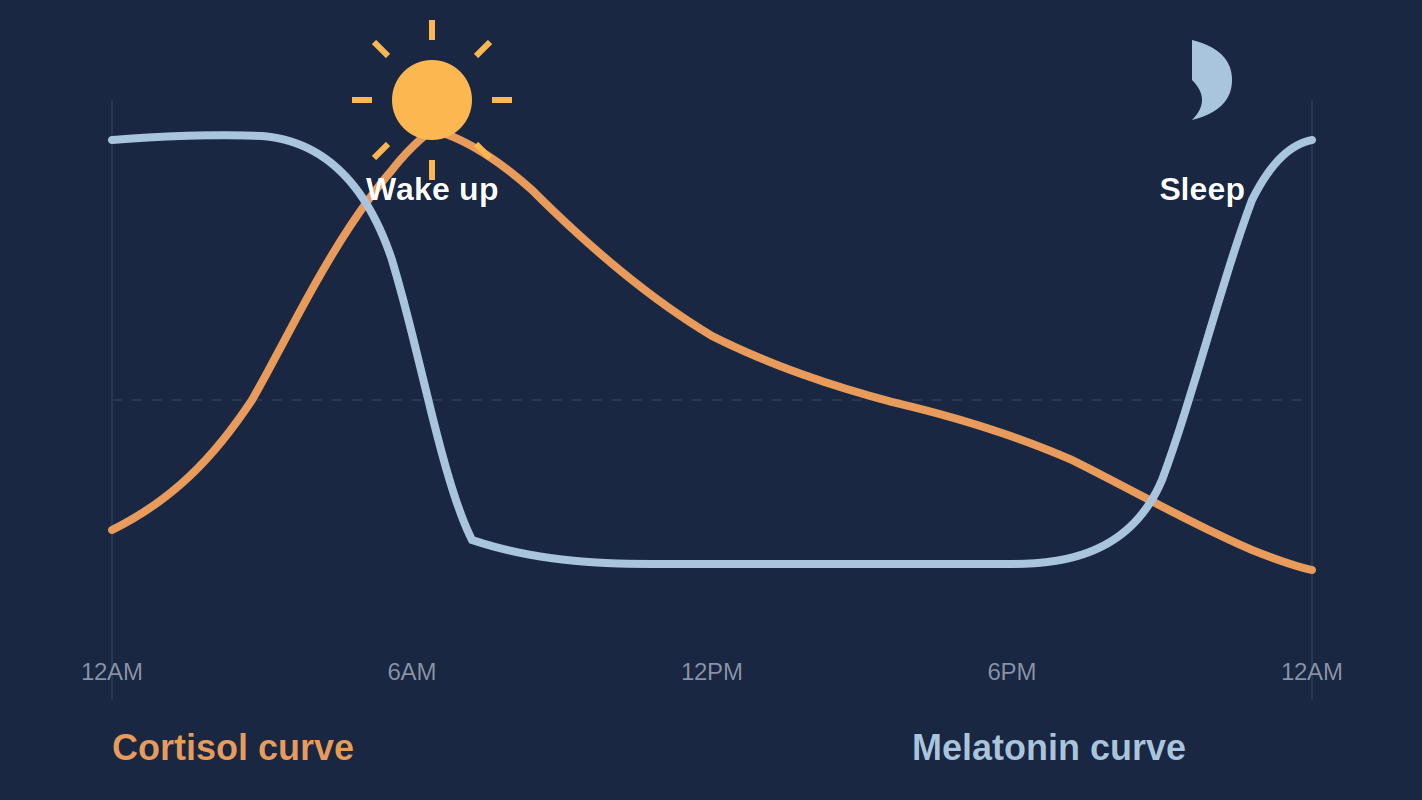
Why You Can't Sleep at Night But Can't Wake Up in the Morning (The Cortisol Problem)
Educational Content Disclaimer: This article provides educational information only and is not intended as medical advice, diagnosis, or treatment. The content discusses general health topics and should not replace consultation with your licensed healthcare provider. Always consult with your doctor before making changes to your diet, supplements, or medications. Dr. JJ Gregor is a Doctor of Chiropractic licensed in Texas and practices within the scope of chiropractic care.
You can't fall asleep at night. Your mind won't shut off. You're exhausted but wired. When you finally do sleep, you wake up at 2 or 3 AM and can't get back to sleep.
Then morning comes. The alarm goes off. You feel like you've been hit by a truck. You can't get out of bed. Coffee doesn't help. You're a zombie until 10 or 11 AM.
This sounds like two separate problems. It's not.
It's one problem: your cortisol rhythm is broken.
What Cortisol Is Supposed To Do
Cortisol is your primary stress hormone, produced...
Why Everyone's Adrenals Are Getting Destroyed Right Now (And What To Do About It)

Educational Content Disclaimer: This article provides educational information only and is not intended as medical advice, diagnosis, or treatment. The content discusses general health topics and should not replace consultation with your licensed healthcare provider. Always consult with your doctor before making changes to your diet, supplements, or medications. Dr. JJ Gregor is a Doctor of Chiropractic licensed in Texas and practices within the scope of chiropractic care.
Everyone is stressed as hell right now and they're getting their ass kicked.
Every person. Every appointment. Every conversation.
Anxiety. Stress. Fear. Sitting in the chest. Crushing. I wrote most of this after teaching at ICAK's winter meeting in Orlando. What became clear in the days after confirmed what I was already seeing in the clinic: everyone, and I do mean everyone, is getting crushed by adrenal exhaustion right now.
Almost all of my patients this week said some version of "I don't know what's wrong ...
Stress Is More Than Just Emotional

Educational Content Disclaimer: This article provides educational information only and is not intended as medical advice, diagnosis, or treatment. The content discusses general health topics and should not replace consultation with your licensed healthcare provider. Always consult with your doctor before making changes to your diet, supplements, or medications. Dr. JJ Gregor is a Doctor of Chiropractic licensed in Texas and practices within the scope of chiropractic care.
I ask every patient the same question: "Are you experiencing stress?"
Nine times out of ten, the answer is: "No, Doc. I'm good. Life is good. The kids are fine. Job's stable. House is safe. I don't experience stress on a daily basis."
Then I examine them. And everything I find tells me the opposite. Their body is screaming stress signals.
Here's the disconnect: when most people hear "stress," they only think about the emotional stuff. The difficult boss. The relationship problems. The financial pressure. Th...
What is Adrenal Fatigue?

What is Adrenal Fatigue?
Adrenal fatigue is one of those terms that natural health practitioners have discussed for decades, but conventional medicine is only recently beginning to acknowledge.
You won't find "adrenal fatigue" in medical textbooks. It's not recognized as a disease. But the symptoms are real, the mechanism is understood, and millions of people are suffering from it right now.
Adrenal fatigue describes a state where your adrenal glands can't keep up with the demands placed on them. They're not pathologically diseased (Addison's disease). They're just exhausted—hypofunction rather than complete failure.
This matters because your adrenal glands regulate stress response, inflammation, blood sugar, immune function, energy production, and more. When they're depleted, everything breaks down.
Here's what adrenal fatigue actually is, how to recognize it, and what to do about it.
Understanding Your Adrenal Glands
Your adrenal glands sit on top of your kidneys. They're smal...
You Might Be More Stressed Than You Think
You Might Be More Stressed Than You Think
Do any of these sound familiar?
Low energy and chronic fatigue. Dizziness when you stand up quickly. Asthma and allergies. Sunlight sensitivity (bright lights hurt your eyes, you constantly wear sunglasses). Muscle and joint pain. Anxiety, panic attacks, and blood sugar crashes. Insomnia. Low sex drive. Digestive issues. Heart palpitations. Thyroid problems.
These symptoms seem random and unconnected.
They're not.
There's one common link: stress and adrenal dysfunction.
Here's why stress affects every system in your body, how to recognize when you've exceeded your adaptive capacity, and what to do about it.
The Problem With How Medicine Views Stress
Most conventional doctors don't recognize the gray zone between "healthy" and "diseased."
In orthodox medicine, you're either pathologically sick (Addison's disease, Cushing's syndrome) or you're fine. There's no middle ground.
But pathology doesn't appear overnight. You don't wake up one ...